10 Suit-Buying Mistakes That Make Men Look Older Than They Are
Most men don’t buy a bad suit — they buy the wrong size of a good suit, and the fit is what ages them. The single biggest suit-buying mistake is prioritizing brand name and fabric quality over shoulder fit and proportion, since a suit that fits your shoulders and skims your frame will always read younger and sharper than an expensive suit that doesn’t.
By the end of this guide, you’ll know exactly which decisions at the register — and before it — are quietly making you look a decade older than you are, and how to fix each one.
1. Buying Based on Size Label, Not Shoulder Fit
Suit sizing is not standardized across brands the way shirt or shoe sizing is, so a “40R” from one label can fit like a 38 from another.
The shoulder seam is the one part of a jacket that a tailor cannot easily alter, which means it’s the only measurement that should drive your buying decision — everything else can be adjusted after the fact. Men who shop by their “usual size” instead of trying on the actual shoulder end up in jackets that pull or droop at the seam, which reads as ill-fitting no matter how sharp the fabric is.
Example: When trying on a jacket, raise your arms slightly. If the shoulder seam lifts off your actual shoulder bone or the fabric bunches at the top of the sleeve, that jacket is the wrong size regardless of what the tag says — move to the next size or a different cut entirely.
2. Choosing a Jacket That’s Too Long
A jacket that hangs too low visually shortens the leg and adds bulk through the middle, which is exactly the silhouette associated with older, boxier suiting from decades past. Modern tailoring has settled on a shorter, cleaner hem because it elongates the leg line and makes the whole outfit look more current. Most off-the-rack jackets are cut long to accommodate a range of torso lengths, so nearly every man benefits from having the hem shortened.
Example: Stand naturally with your arms at your sides — the jacket hem should land right where your thumb knuckle folds, roughly mid-palm. If it covers your entire palm, have a tailor shorten it by half an inch to an inch.
3. Ignoring Sleeve Length and Shirt Cuff Show
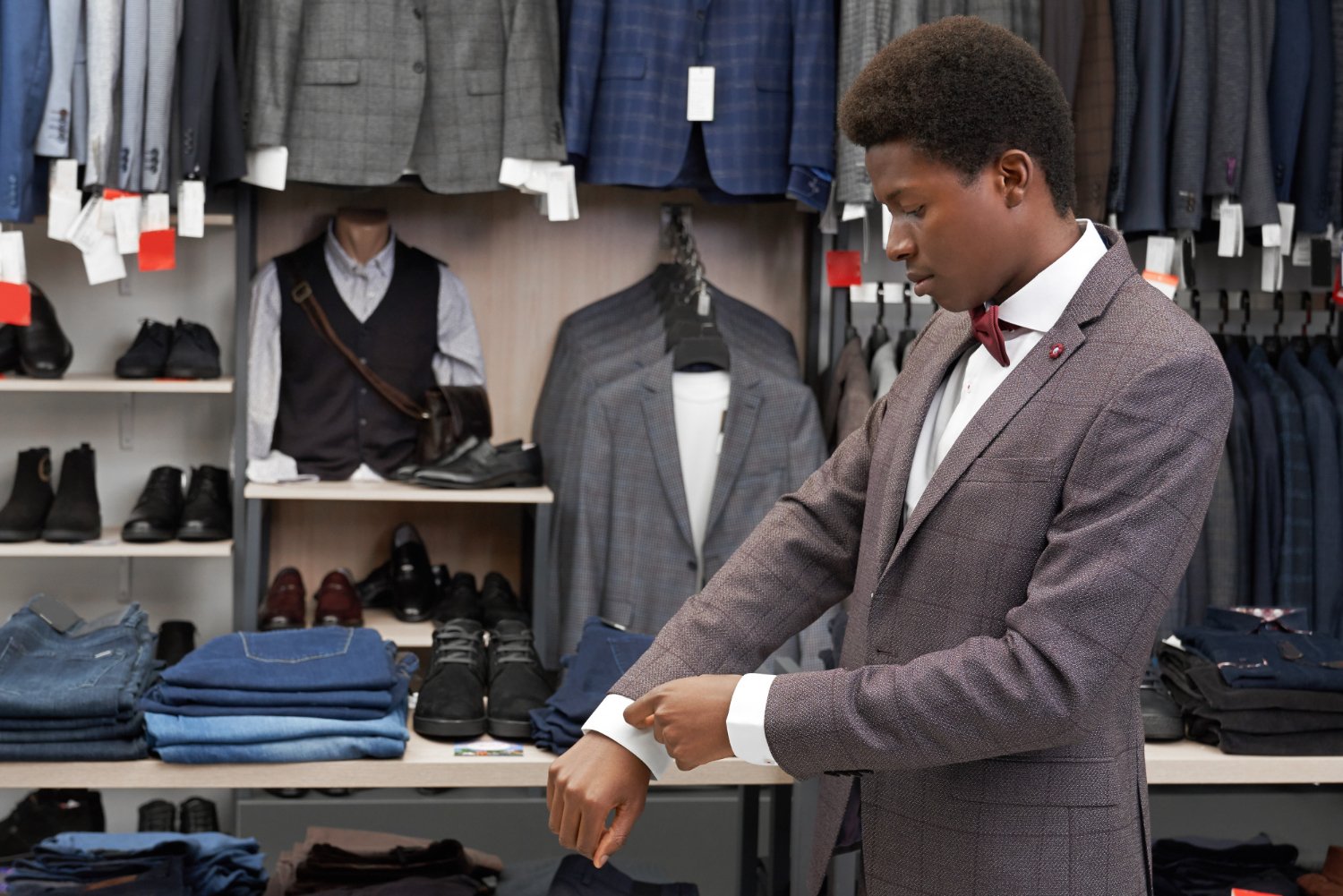
Sleeve length is one of the fastest visual cues the eye picks up, even subconsciously, because it affects how proportional your hands and wrists look against the jacket. A sleeve that swallows the wrist reads as borrowed or outdated, while a quarter to half inch of shirt cuff peeking out signals intentional, current tailoring. This is a five-minute alteration that most men never bother to request, leaving an otherwise great suit looking sloppy.
Example: With your arms relaxed at your sides, your jacket sleeve should end right at the wrist bone, letting a quarter to half inch of shirt cuff show below it — ask your tailor for this exact reference point rather than a vague “shorten the sleeves.”
4. Ordering Pants Without a Break Preference
The “break” — how the pant hem meets the shoe — has shifted dramatically over the past fifteen years, from the deep, stacked break common in the ’90s and 2000s to the clean, no-break or slight-break silhouette favored today. A full break bunches fabric at the ankle and visually shortens the leg, which is a major contributor to a dated look even when the jacket is perfectly modern. Most tailors will default to a traditional break unless you specify otherwise, so this mistake usually happens by omission, not choice.
Example: Ask for a “slight break” — the pant hem just grazes the top of the shoe with a small break in the fabric — or a “no break” if you want a slimmer, more contemporary line, especially with slim or tapered trousers.
5. Defaulting to Black
Black suits read as formalwear — think funerals and weddings — and outside those contexts they tend to look severe and one-dimensional rather than sharp. Navy and mid-grey are more versatile because they pair naturally with a wider range of shirt and tie colors, photograph better, and are what most tailors and stylists actually recommend as a first suit. A black suit also shows lint, dust, and fading faster than navy or grey, which compounds the aging effect over time.
Example: If you’re buying your first or only suit, choose a mid-grey or navy in a fresco or tropical wool — both work for interviews, weddings (as a guest), and business settings, whereas black narrows you into fewer occasions.
6. Overlooking Lapel Width for Your Build
Lapel width isn’t just a trend detail — it changes how broad or narrow your chest appears, similar to how a tie’s width affects proportion. Lapels that are too wide for a slim build overwhelm the frame, while lapels too narrow on a broader build look pinched and undersized. Getting this proportion right is part of why a suit can look “expensive” even when it isn’t — it’s about visual balance, not price.
Example: As a general guide, a notch lapel between 3 and 3.5 inches wide suits most builds and stays in style longer than the ultra-narrow or ultra-wide extremes that date quickly in photos.
7. Skipping Tailoring Because “It’s Fine”
Off-the-rack suits are cut to a generic average, not to your specific proportions, so “fine” almost always means “loose in places it shouldn’t be.” Tailoring is the difference between a suit that looks like it was made for someone else’s body and one that looks custom — and it typically costs a fraction of the suit’s price. Men who skip this step are the ones who end up looking like they’re wearing a hand-me-down, even in a brand-new suit.
Example: Budget $50–$150 for basic alterations (sleeve length, pant hem, waist suppression) on top of any suit purchase — treat it as part of the suit’s actual price, not an optional add-on.
8. Matching Belt and Shoe Color, But Not Texture
Most men know to match the leather color of their belt to their shoes, but far fewer think about matching the finish — smooth calfskin belt with textured suede shoes, for instance, creates a subtle mismatch that reads as “almost right” rather than intentional. This is a small detail, but small mismatches are exactly what separate a put-together look from a merely adequate one. Texture consistency signals attention to detail the way color-matching alone doesn’t.
Example: If you’re wearing smooth leather oxfords, pair them with a smooth leather belt in the same shade — save suede belts for suede shoes or more casual, textured leather footwear.
9. Buying Fully-Lined When You Don’t Need It
Fully-lined jackets were the default for decades because they held their shape better with older, heavier construction methods, but modern half-canvas and unlined jackets achieve the same structure with far more breathability and a softer drape. A fully-lined suit in a warm climate or for a summer event will look and feel stiffer, which contributes to a boxier, older silhouette. This is less about temperature comfort and more about how the fabric moves and falls on the body.
Example: For spring and summer suits, look for “half-lined” or “unlined” construction in the jacket description — it drapes closer to the body and moves more naturally when you walk.
10. Treating the Suit as a One-Time Purchase
A suit’s fit changes as your body does — weight fluctuation, posture, even different shoe heights can shift how a jacket or pant hangs within a year or two. Men who buy a suit and never revisit the fit end up wearing something that quietly stops fitting well, without noticing the gradual change. Revisiting fit periodically is what separates a man who “has a suit” from one who consistently looks sharp in it.
Example: Once a year, try your suit on with the shoes and shirt you’d actually wear with it, and check the shoulder, waist, and break — small adjustments (an inch of waist suppression, a quarter-inch hem change) keep it looking current.
Quick Summary
| # | Mistake | Fix |
|---|---|---|
| 1 | Buying by size label | Fit the shoulder first, always |
| 2 | Jacket too long | Hem should hit thumb-knuckle level |
| 3 | Sleeves too long | Show ¼–½ inch of shirt cuff |
| 4 | No break preference | Ask for slight or no break |
| 5 | Defaulting to black | Choose navy or mid-grey first |
| 6 | Wrong lapel width | Stick to 3–3.5 inches for most builds |
| 7 | Skipping tailoring | Budget $50–$150 for alterations |
| 8 | Mismatched leather texture | Match finish, not just color |
| 9 | Fully-lined in warm weather | Choose half-lined or unlined |
| 10 | Never rechecking fit | Reassess fit annually |
FAQs
What is the most common suit-buying mistake men make?
Quick answer: buying by size label instead of shoulder fit. The shoulder seam can’t be altered later, so it’s the single measurement that should drive whether a jacket is right for you. Every other adjustment — sleeves, waist, hem — can be tailored after purchase.
How much should I budget for suit alterations?
Plan on $50–$150 on top of the suit price for basic alterations like sleeve length, pant hem, and waist suppression. Think of this as part of the total cost of the suit, not an optional extra, since an unaltered suit rarely fits correctly off the rack.
Is navy or black better for a first suit?
Navy is generally the better first suit because it’s more versatile across business, semi-formal, and wedding-guest settings, while black is reserved for formal and funeral contexts. Navy also tends to photograph and wear better over time than black, which shows fading and lint more visibly.
How do I know if my suit jacket is too long?
Stand naturally with your arms relaxed — the jacket hem should land around your thumb knuckle, roughly covering half your palm. If it covers your whole palm or extends past your fingertips, it’s too long and should be shortened by a tailor.